
How to Make Elderberry Syrup from Dried Berries
Making elderberry syrup at home is not complicated. It is berries, water, a little heat and some patience. Almost everything that goes wrong comes down to two things — not cooking the berries long enough, and adding the sweetener while the pan is still hot. Here is the method we use, and what food safety researchers say about the parts that actually matter.
What you need
- Dried elderberries. One cup of dried berries stands in for roughly two cups of fresh or frozen, according to University of Maine Cooperative Extension. Start with our dried organic elderberries.
- Water, roughly four cups to one cup of dried berries.
- Aromatics. We use organic Ceylon cinnamon, ginger root and cloves in our own syrup, and they work just as well in a home batch.
- A sweetener. Raw honey or maple syrup, added later.
- A fine-mesh sieve, and a clean glass jar with a lid.
The method, step by step
- Put the dried berries, water and aromatics in a saucepan.
- Bring it to a boil, then turn the heat down and simmer until the liquid has reduced by about half. Leave the pan uncovered.
- While that reduces, sterilize your jar by boiling it fully submerged for ten minutes.
- Strain the mixture through a fine-mesh sieve into the jar, pressing the fruit to get the liquid out. Discard the spent berries and any stems.
- Let it cool to room temperature before you add the sweetener. Stir to combine.
- Lid on, into the refrigerator.
Why the simmer is not optional
This is the step people shorten, and it is the one that matters most. Raw elderberries — along with the stems, leaves and seeds — contain naturally occurring compounds that release cyanide during digestion. University of Minnesota Extension is clear that raw or improperly prepared elderberries can cause nausea, vomiting and worse, and that cooking is what makes syrups and jams safe.
Drying does not solve this. Drying preserves fruit, it does not heat-treat it, and dried berries still need to be cooked before anyone drinks what you make. Oregon State University Extension puts it plainly: always cook elderberries before eating them. If you see a recipe online that has you stir dried berries into warm honey and call it finished, skip it.
Add the sweetener off the heat
Cool the strained liquid to room temperature first, then stir in your sweetener. There is no benefit to adding honey to a hot pan, and if you are using raw honey you will cook off the character you paid for. Maple syrup works the same way and suits anyone avoiding honey.
Honey is not for children under one
Honey should not be given to any child younger than twelve months. Michigan State University Extension sets out the reasoning — honey can carry Clostridium botulinum spores, and the CDC and the American Academy of Pediatrics both advise against it for infants. Use maple syrup instead if the batch is for a household with a baby in it. It is the same reason we make a maple version of our own syrup.
How long a home batch keeps
Shorter than most people expect. University of Maine Cooperative Extension recommends refrigerating homemade elderberry syrup for about two weeks, or freezing it for up to eight months for best quality. Freeze it in small portions rather than one large jar so you are not thawing the whole batch each time.
A bottle from us keeps longer than a home batch does, because of how it is made and bottled rather than anything added to it. Our shelf life and storage guide has the numbers for each formulation.
Do not can it
This one catches people out. Research over the past decade found that several elderberry varieties sit at or above pH 4.6, which is the cutoff for safe boiling-water canning. That means standard water-bath canning is not a safe route for elderberry syrup without a tested, high-sugar recipe. Freeze it instead.
Where home batches usually go wrong
- Cutting the simmer short, so the liquid never reduces by half.
- Stirring honey into a hot pan.
- Leaving stems or underripe fruit in the mix before pressing.
- Water-bath canning it.
- Treating dried berries as though they are ready to use straight from the bag.
If you would rather not stand over a pan
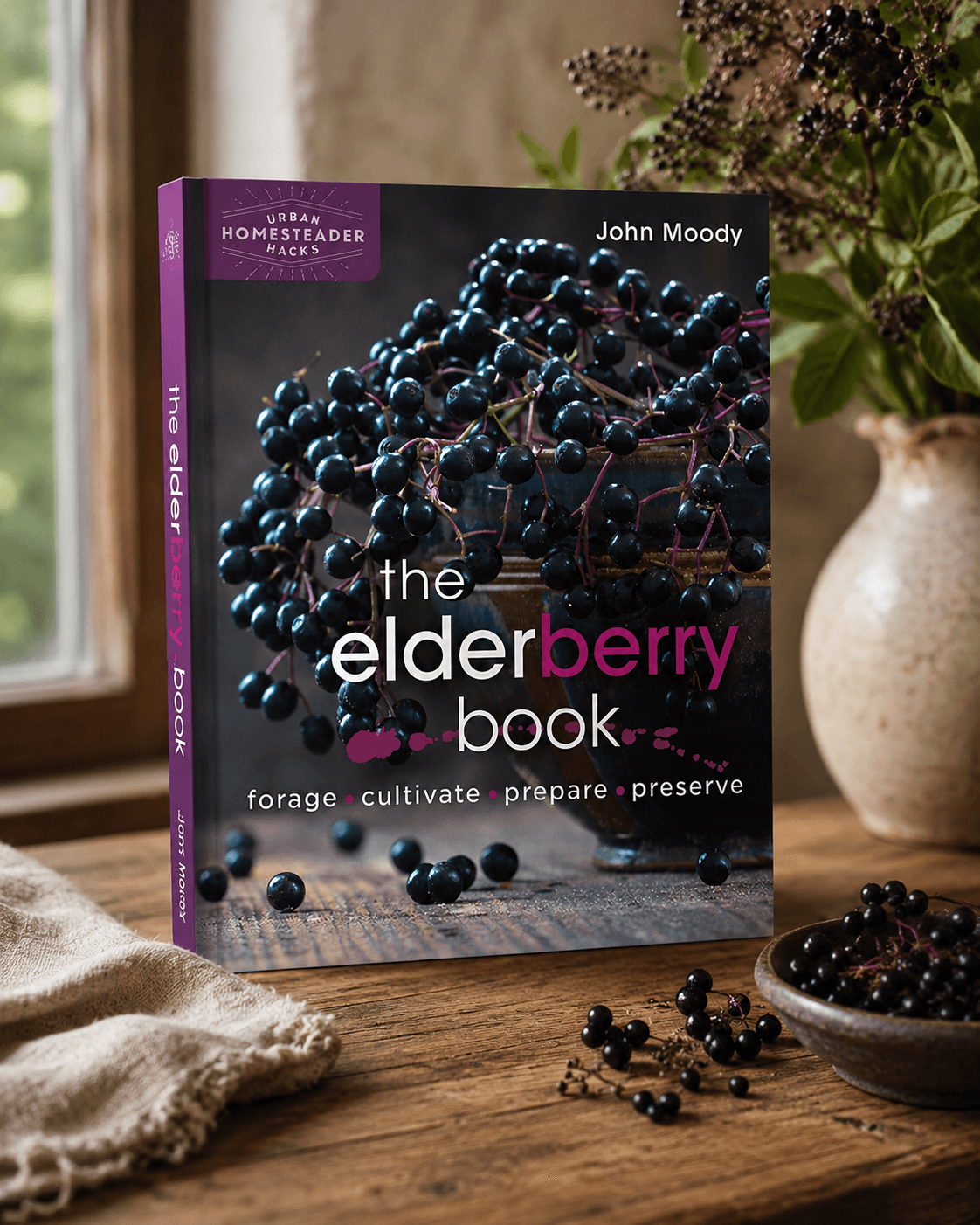
Our DIY Elderberry Kit has the berries, the spice blend and the instructions together, which takes the guesswork out of ratios. For the longer story — identification, growing, and preparing elderberries properly — The Elderberry Book by John Moody goes far deeper than any recipe post can. And if the species question came up while you were shopping for berries, we cover that in our guide to American and European elderberries.
Or skip the pan entirely and let us do it. Our elderberry syrup is made in small batches on our farm, with the same ingredients you would use at home.
Get in Touch
Contact Number: 812-748-2111
Email: info@abbyselderberry.com
These statements have not been evaluated by the Food and Drug Administration. This product is not intended to diagnose, treat, cure, or prevent any disease.