How to Read an Elderberry Syrup Label
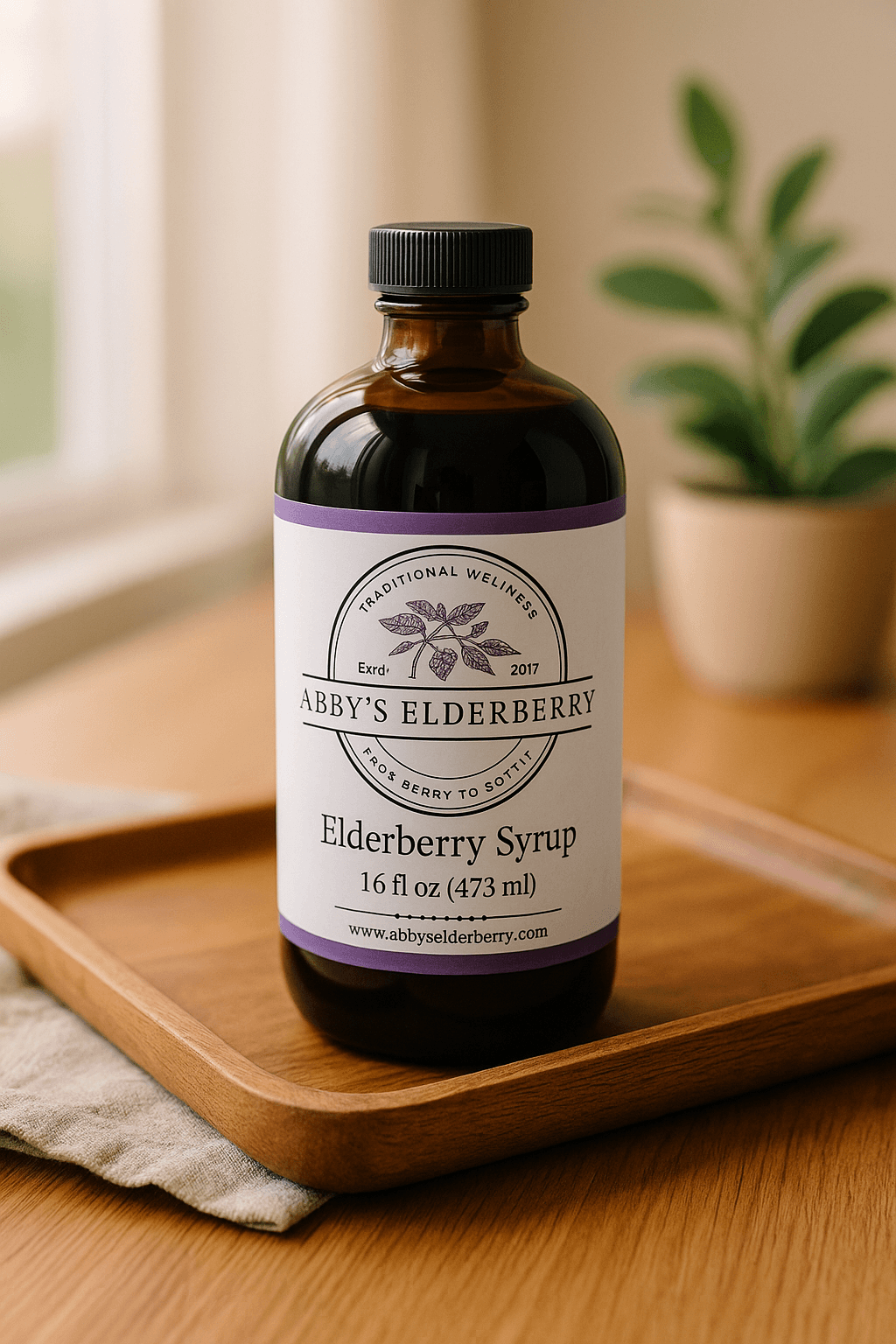
Two bottles can look identical on the front and be made completely differently. The back of the label sorts them out in about thirty seconds.
Six things worth checking, in the order we’d check them.
1. How Long the Ingredient List Is
Berries, water, spice, sweetener. That’s a short list. A long one usually means something is doing the job that refrigeration would otherwise do.
Ours reads: filtered water, either local raw honey, local maple syrup, or glycerin, organic elderberries, organic Ceylon cinnamon, organic ginger root, organic cloves. That’s all of it, and you can check it against any bottle on the 16 ounce page.
Read the order too. Lists run by weight, so the first item tells you what the bottle mostly is. On a lot of elderberry syrups, that’s sugar.
2. Which Sweetener
Sweetener decides more than flavor. It sets how long the bottle keeps, whether it fits a low-sugar household, and who at your table can have it.
Honey is the traditional pairing. Maple gives a different profile. Glycerin is the low-carb route and the most stable of the three. Some bottles skip it entirely.
One rule holds across every brand: honey should never be given to babies under one year old, because of the risk of infant botulism. The CDC is unambiguous on that, and it applies to any product containing honey. It’s why we make a maple version and mark it infant friendly. If you’re buying for a young family, check this before anything else on the label.
3. Whether It Was Heat-Treated
Few labels say this outright. The storage line gives it away.
“Keep refrigerated” generally means a fresher product with fewer preservatives. A bottle that sits happily in a cupboard for a year or more has usually been heated, preserved, or both. Neither is wrong. They’re different products, and you want to know which one is going in your basket.
We don’t pasteurize, which is why our refrigerated bottles carry a stated window rather than an open-ended date, and why we also make shelf-stable honey and maple for people who need a cupboard option.
4. Where the Berries Came From
Nearly every label says elderberry. Far fewer say where it came from, and fewer still name the species — most commercial syrup uses European Sambucus nigra, though American elderberry grows across the Midwest, including here. Vagueness on a label is a signal in itself.
This is the question a small maker can answer and a large one often can’t. Ours are certified organic, made in small batches, and stirred by hand — which sounds like marketing until you’ve watched someone do it for an afternoon. The whole story is on our about page.
5. What the Organic Wording Actually Claims
Organic claims are regulated, but they aren’t all the same claim. “Made with organic ingredients” and “certified organic” mean different things, and the difference is on the label if you know to look. The USDA National Organic Program sets out what each version is permitted to say.
Our elderberries and whole spices are certified organic. Anything more specific about our sourcing, ask us — we’ve never minded the question, and a maker who dodges it is telling you something.
6. Size Against Shelf Life
Two bottles at the same price aren’t comparable until you check the volume and the serving count. A bigger bottle is only better value if your household finishes it inside its window.
That applies to everything on the shelf, ours included — the same logic decides which jar of raw honey makes sense for your kitchen. Work out what you’ll actually get through before you compare anything else.
The Short Version
- Short ingredient list, and read the order.
- Check the sweetener twice if there’s a baby in the house.
- The storage line tells you whether it was heat-treated.
- Vague sourcing is a signal.
- Know what the organic wording claims.
- Size is only value if you finish it.
The FDA’s food labeling pages set out what a label has to tell you, which is a useful baseline for spotting what a brand chose to add beyond it. If you want to run the list above against ours, every formulation and its full ingredients are on the syrup pages.
Get in Touch
Contact Number: 812-748-2111
Email: info@abbyselderberry.com
These statements have not been evaluated by the Food and Drug Administration. This product is not intended to diagnose, treat, cure, or prevent any disease.