
Ways to Use Elderberry Syrup Beyond the Spoon
Elderberry was food long before it was a supplement — Britannica’s entry on the elder traces it back through centuries of kitchens, jams, and wine. Somewhere along the way it ended up in a dosing spoon.
Ours behaves like any thick fruit syrup: sweet, tart, deeply colored, and spiced with cinnamon, ginger, and clove. Here is what our family actually does with it.
Breakfast
The easiest place to start, and where most bottles get used up.
- Stirred through plain yogurt, which turns it purple and saves you buying the flavored kind.
- Over oatmeal, where the spice already belongs.
- On pancakes and waffles — the maple formulation is the obvious one here.
- Swirled into overnight oats before they go in the fridge.
A teaspoon goes further than you’d think in any of these. The flavor is concentrated.
Drinks
Hot tea is the classic. Stir it in near the end rather than into boiling water, and it dissolves without going gluey. It works with any of our herbal blends, though the hibiscus and the ginger take it best.
Cold, it does something better. A spoonful in sparkling water with a squeeze of lime makes a proper drink — the tartness holds up against the carbonation in a way most fruit syrups don’t. It’s also the base of a decent mocktail if you add mint and a little citrus.
In lemonade, it turns the whole jug ruby and cuts the sweetness.
Dressings
This is the one people don’t expect. Elderberry syrup works as the sweet component in a vinaigrette, sitting where honey or maple usually would.
Three parts oil, one part vinegar, a spoonful of syrup, mustard, salt. Balsamic or red wine vinegar suit it best. It goes particularly well over anything with goat cheese, walnuts, or roasted beets.
Glazes and Marinades
The syrup reduces well, which makes it a glaze. Brush it onto pork, chicken, or duck in the last few minutes of cooking — any earlier and the sugars catch and burn.
As a marinade it wants an acid and something savory alongside it: vinegar or citrus, soy or Worcestershire, garlic. Marinate in the refrigerator rather than on the counter, and never reuse the marinade as a sauce unless you boil it first. The USDA covers the cold-chain side, and FoodSafety.gov has the rest of the handling basics for raw meat.
It also works stirred into a pan sauce after the meat comes out, which is faster and harder to get wrong.
Which Formulation for Which Job
This matters more than people expect, and it’s the one thing we can tell you that a recipe site can’t.
- Just Elderberry, with no sweetener at all, is the one for savory cooking. You control the sugar yourself, which is what you want in a glaze or a dressing.
- Maple belongs on breakfast. It was always going to.
- Original, with raw honey, is the all-rounder — good in drinks, good on yogurt.
- Low-Carb, sweetened with glycerin, behaves differently under heat than sugar does, so it’s better cold than reduced.
All seven are on the 16 ounce page if you want to compare them.
A Note on Heat
Our syrup isn’t pasteurized, so cooking it does change it. That’s fine for a glaze, where you want it to thicken and caramelize anyway. For yogurt, drinks, and dressings, it goes in cold or near the end.
If you are cooking with the honey-sweetened versions, the National Honey Board has good guidance on how raw honey behaves under heat, and the same broadly applies here.
If You’d Rather It Was Already a Spread
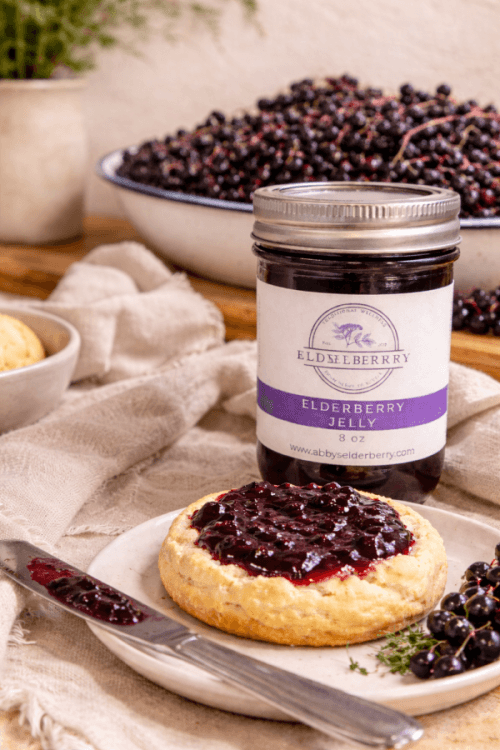
For toast and biscuits, our elderberry jelly does the job the syrup can’t — same berry, set rather than pourable.
The Practical Reason to Cook With It
A bottle used five ways gets finished. A bottle used one way sits in the fridge door until it ages out, which is a waste of good syrup and your money.
Households that cook with it go through it noticeably faster, which is worth knowing before you pick a bottle size or set up a subscription.
Get in Touch
Contact Number: 812-748-2111
Email: info@abbyselderberry.com
These statements have not been evaluated by the Food and Drug Administration. This product is not intended to diagnose, treat, cure, or prevent any disease.