What Makes Raw Honey Different from Regular Honey
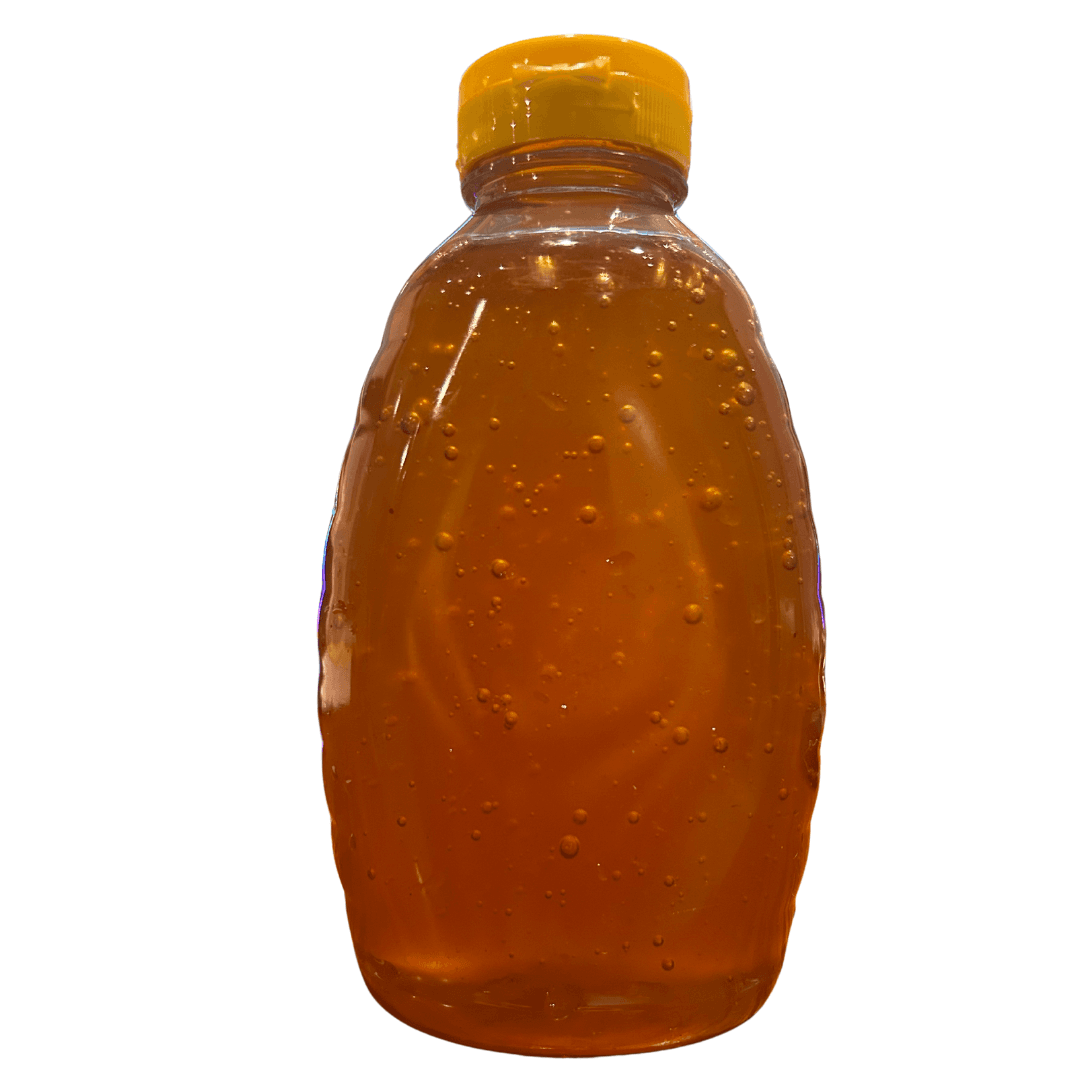
Raw, unfiltered, unpasteurized, pure — the words get thrown around loosely on honey labels, and they do not all mean the same thing. Here is what actually separates raw honey from the squeeze bottle at the grocery store, why a good jar eventually turns solid, and the one household rule that matters more than any of it.
What “raw” actually means
There is no official federal definition of raw honey in the United States. The National Honey Board defines it as honey as it exists in the beehive, or as obtained by extraction, settling or straining without adding heat. That definition carries no legal weight, but it is the one the industry works from.
The key word is heat. Straining honey to get wax flakes and bits of hive out of it does not make it any less raw. Heating it does. That distinction gets blurred constantly, because “unfiltered” and “raw” are not the same claim and a jar can be one without being the other.
What happens to honey on the way to a supermarket shelf
Most honey sold at scale is heated and filtered before bottling, and both steps are done for the same reason — shelf appearance. According to USDA grading standards, filtered honey has had all or most of the fine particles, pollen grains and air bubbles removed. The National Honey Board is straightforward about why: those suspended particles make honey crystallize faster, so filtering them out keeps the jar looking clear and liquid for far longer on the shelf.
None of that makes filtered honey bad. It makes it a different product, optimized for looking the same in January as it did in June.
Why raw honey turns solid in the jar
All honey crystallizes eventually. Raw honey just gets there sooner, because the trace pollen and fine particles still in it give the sugar crystals something to form around.
A jar that has gone thick, grainy or solid has not spoiled and has not gone off. It is doing what unprocessed honey does. If anything it is a reasonable sign that what you bought was not heavily processed on its way to you.
How to bring it back
Gently, and with water rather than a microwave. University of Missouri Extension recommends standing the honey in an open container in a pan of warm water until it runs clear again, and specifically warns against doing this while the honey is in a plastic container.
Do not rush it with boiling water. Oregon State University Extension notes that honey can reach much higher temperatures than the water around it, so the jar gets dangerously hot faster than you expect. Heat it thoroughly enough that no crystals survive, or it will set again quickly.
How to store it so it lasts
- Keep it between 50 and 70 degrees Fahrenheit for everyday storage, out of direct sunlight.
- Keep the lid properly sealed. A loose or two-piece lid lets air in, which encourages crystals to form.
- Do not refrigerate it. Cold speeds crystallization up rather than slowing it down.
- Glass with a tight-fitting cap beats plastic for anything you are keeping a while.
Honey is still sugar
Worth saying plainly, because a lot of honey marketing skates around it. University of Missouri Extension puts it directly — honey is made of the same basic components as cane or beet sugar, and the body uses it the same way. It is not a substitute for sugar in a sugar-restricted diet, and the nutrients it carries are present in small amounts relative to its calories.
We sell honey and we still think that is the honest framing. Buy raw honey because of how it tastes and how little was done to it, not because you were told it behaves differently from sugar.
Not for children under one
This one is not negotiable. Honey should never be given to a child younger than twelve months, in any form, including stirred into food or water. Michigan State University Extension sets out the reasoning — honey can carry Clostridium botulinum spores, and both the CDC and the American Academy of Pediatrics advise against it for infants.
It is the same reason we make a maple-sweetened version of our syrup, and it is worth checking before you hand anything honey-sweetened to a household with a baby in it. Our guide to syrup sweeteners covers which of our formulations suit which household.
The honey we use
The raw honey we sell is the same honey that goes into our products. It has not been heat treated. That is also why it works well stirred into a batch you make yourself — if you are following our method for syrup from dried berries, the honey goes in once the pan has cooled, not while it is hot.
If you would rather have the berries, the spice blend and the instructions in one place, the DIY Elderberry Kit covers it. And if you would rather we did the work, our elderberry syrup comes honey-sweetened, maple-sweetened or unsweetened.
Get in Touch
Contact Number: 812-748-2111
Email: info@abbyselderberry.com
These statements have not been evaluated by the Food and Drug Administration. This product is not intended to diagnose, treat, cure, or prevent any disease.